Tucked away in the trans-Himalayan region of Nepal, Upper Mustang is a land of ancient Tibetan culture, dramatic desert landscapes, and centuries-old monasteries. Once a restricted kingdom, this remote region now welcomes travelers seeking adventure without the rigors of high-altitude trekking.
Explore the mythical walled city of Lo Manthang, its historic King’s Palace, narrow lanes lined with traditional mud-brick houses, and ancient Shakya monasteries, including Thubchen, Jampa, and Chode. Venture further into the region to discover the forgotten “sky caves,” many adorned with ancient Buddhist murals and believed to have served as burial sites. You will also visit the renowned Kagyu Luri Gompa and Tashi Kabum “sky cave,” both dating back more than 500 years and preserving some of the most exquisite murals in the Tibetan Buddhist world. For those seeking a more adventurous experience, a spectacular ridge-line hike leads to the hidden Buddhist cave of Konchok Ling. You will also spend a couple of days exploring the remote and dramatic Chhoser Valley, with its remarkable caves, monasteries, and traditional settlements. In addition, there are many festivals that take place in Upper Mustang. Yartung Festival and Tiji Festival are the most important seasonal festivals that take place in summer and spring in the Upper Mustang Lomanthang. Especially focused on these two festivals: the Yartung Festival Trek and the Tiji Festival Trek are the best trips to observe the most important festivals.
The Yartung Festival is one of the most vibrant summer celebrations in Nepal’s Mustang region, observed in villages across both Lower and Upper Mustang. In Lower Mustang, festivities take place in settlements such as Muktinath, Khinga, Tetang, and Phelak. In Upper Mustang, the celebrations in Tsarang and Lo Manthang hold particular cultural significance, with each community observing the festival according to its own dates and traditions.
Etymologically, Yar translates as “summer,” while Tung means “end.” Thus, Yartung signifies a festival that bids farewell to summer. Far more than a seasonal celebration, Yartung is a rich tapestry of social, cultural, religious, and ecological traditions in Lo Manthang, the historic and once-forbidden kingdom of the Nepalese Himalayas. Held annually in August, the festival unfolds over three vibrant days filled with sacred rituals, traditional performances, communal gatherings, horse racing, and other community activities.
Day 1: King’s Day
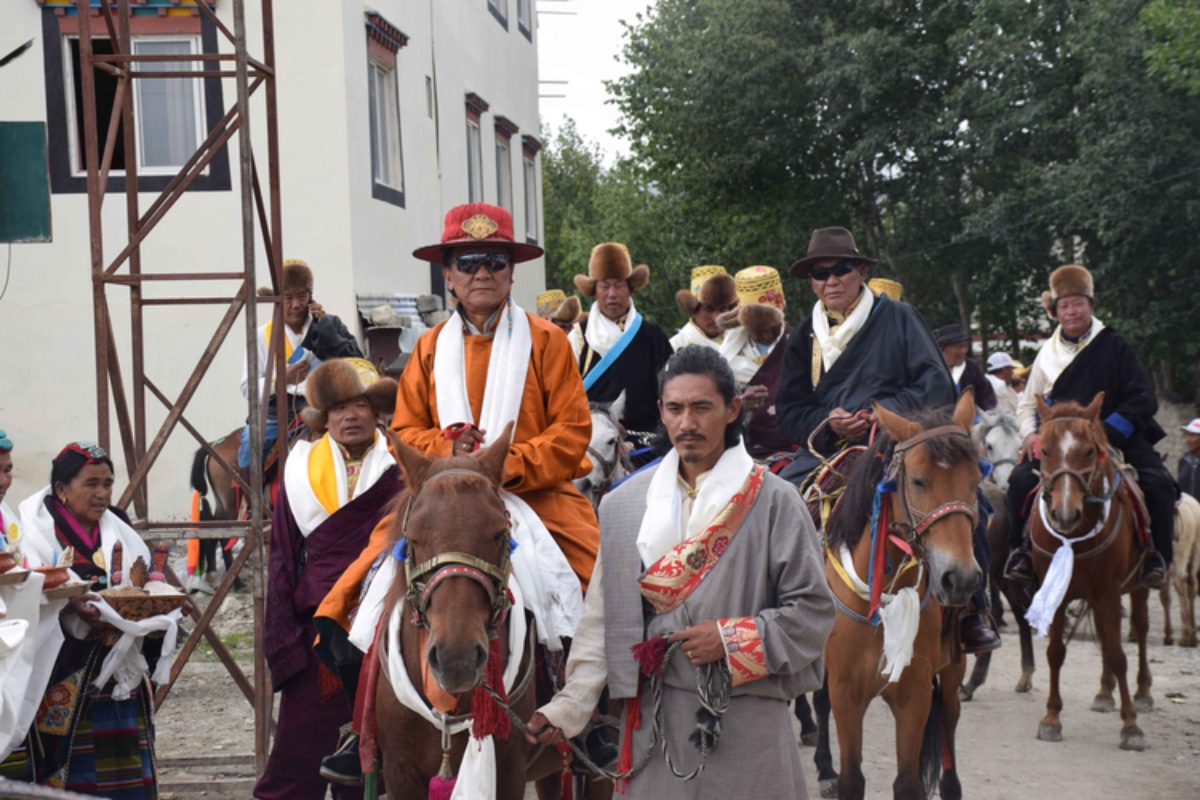
Known as King’s Day, the first day of the festival begins in the morning with the chief lama conducting worship of the village deity, Yulha. Later, the Si Ju Sihi—four representatives from different community clusters—visit the palace to receive the King’s blessing.
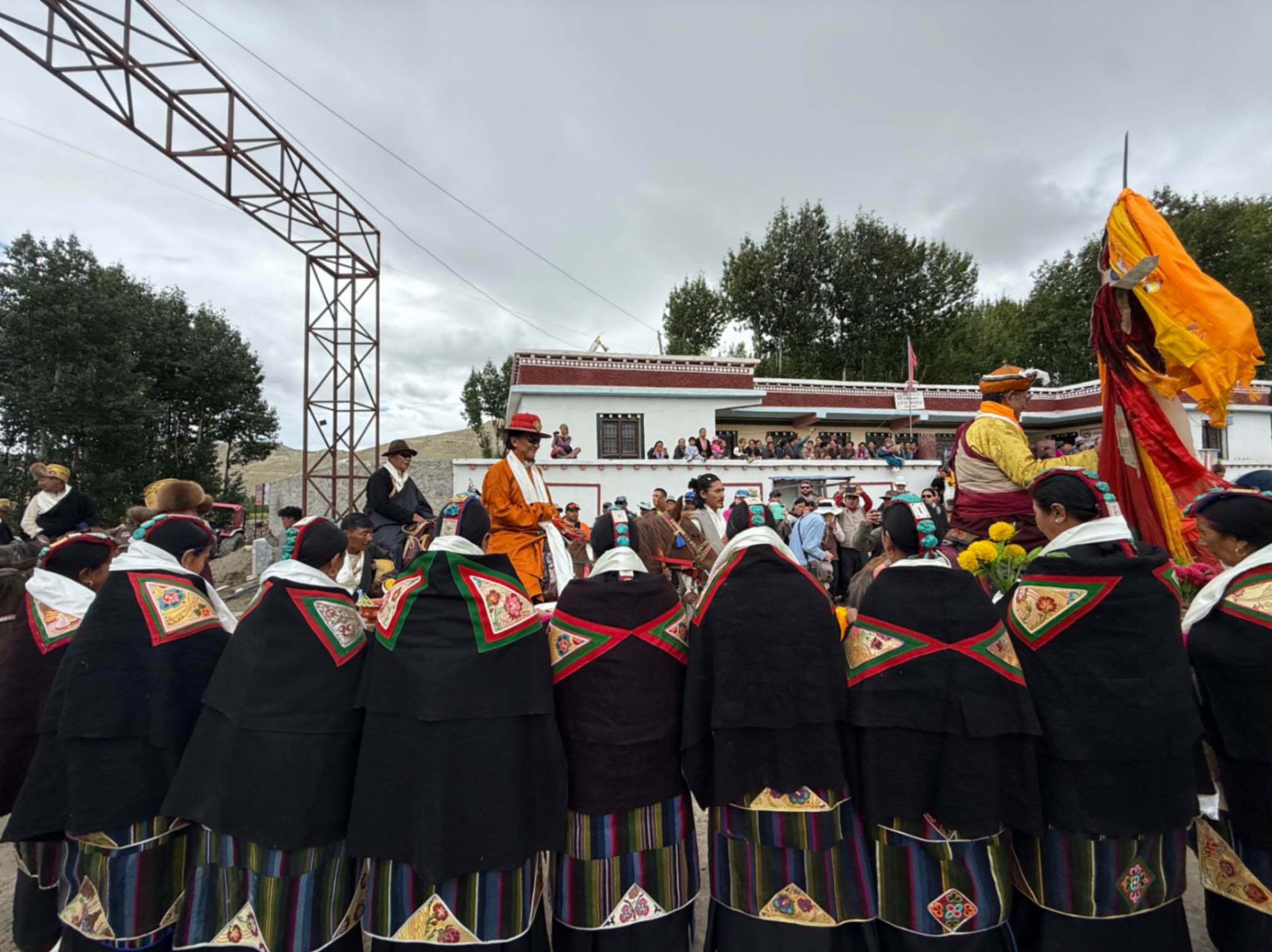
The villagers then gather at the palace and escort the King through the town, singing traditional songs and beating drums. Upon reaching the western gate of the walled town of Lo Manthang, women line up carrying welcome vases filled with wine, grains, and flowers.
When the King arrives accompanied by the chief lama and Dungmara, the sacred horse, the women offer them welcome drinks and perform traditional songs. The procession then continues to the festival grounds, where six tents are arranged around a central flagpole adorned with Lungdar prayer flags. Here, villagers sing and dance before gathering at the King’s tent to receive his blessing.
Day 2: Queen’s Day
Known as Queen’s Day, the second day begins with the Si Ju Sihi, the four representatives from different community clusters visiting the palace to receive blessings from both the King and Queen.The villagers then gather at the palace and escort the royal couple through the town, accompanied by traditional songs and the rhythmic beating of drums. Upon reaching the western gate of the walled town, women line up carrying welcome vases filled with wine, grains, and flowers. When the King and Queen arrive, accompanied by the chief lama and Dungmara, the sacred horse, the women offer them welcome drinks and perform traditional songs. The procession then proceeds to the festival grounds, where six tents surround a central flagpole adorned with Lungdar prayer flags.The villagers sing and dance, and everyone gathers at the royal tent to receive blessings from the King and Queen. The day’s celebrations also feature an exciting traditional horse race, one of the festival’s most anticipated events.
Day 3: Monk’s Day
The final day is known as Monk’s Day. Villagers begin the morning by visiting the local monastery to receive blessings from the lamas and monks. Later, the monks join the villagers in a procession to the pastureland, where the local community prepares and serves a ceremonial meal for them.
This marks the final day of the Yartung Festival, a communal farewell to the monks and to the summer season. As the celebrations come to an end, the people of Lo Manthang bid farewell to summer and prepare for the changing season ahead.
Trip Brief
The Yartung Festival trek is a hybrid adventure that combines flights, scenic jeep journeys, and trekking through the spectacular landscapes of the Upper Mustang region. The journey begins with a morning flight from Kathmandu to Pokhara, followed by a scenic drive to Marpha. From Marpha, you will continue by jeep towards Chhusang, where the trekking portion of the journey begins. From Chhusang, the trek takes you through Samar, Syangboche, and Ghiling. You will then continue trekking to Ghami, Dakmar, and Tsarang, experiencing the distinctive landscapes, villages, monasteries, and cultural heritage of Upper Mustang along the way. From Tsarang, the trail continues towards Yara/Ghara and eventually to Lomanthang, the historic walled city and cultural heart of Upper Mustang. In Lomanthang, you will have the opportunity to experience the vibrant three-day Yartung Festival, one of the most important traditional festivals of the region. The festival offers a unique insight into the cultural traditions, horsemanship, music, rituals, and community life of Upper Mustang. Following the festival, you will spend a day exploring Chhosyar and the surrounding areas, visiting its remarkable landscapes, villages, caves, and cultural sites. Finally, you will drive back towards Lete and continue to Pokhara, from where you will take a flight back to Kathmandu, bringing this memorable journey through Upper Mustang to an end.
